Yesterday, I went to have a soily chat with the wonderful Richard Smith from the Environment Agency, and discovered the wonder that is The Langaford Charitable Trust: https://www.langafordtrust.org/
The meadows were bursting with the plump-nosed, papery seed heads of hayrattle, a xylem-feeding hemi-parasitic plant that inhibits the growth of grass and paves the way for other wildflowers to grow more freely. Peeping out of the mix, butterfly orchids graced us with their presence, almost too dignified to be wrapped up in such a wonderful fecund tangle. Fenced off in the middle of the meadow was a 15-year-old soil pit that we stepped down into. The graded umber palette of soils and rock revealed stories both ancient and modern – traces of granite turned to soft crumbly shale, past land use, and homes for miner bees. Lines of dark, peaty soil smudged their way downwards down into the pale subsoil – old worm-ways – trails blazed for tiny delicate roots to sink their way further and deeper.
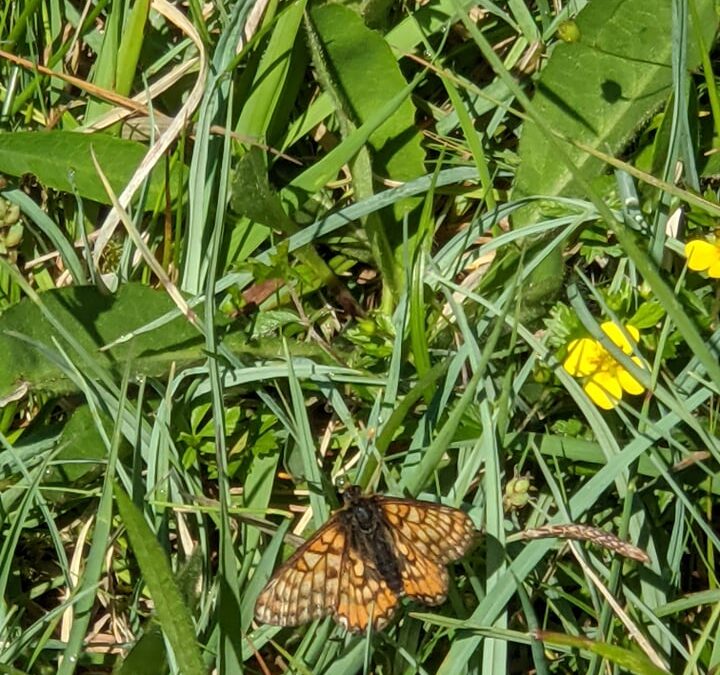
Walking further into the land, we dropped down to a young alder wood flanked with wild iris and criss-crossed with babbling brooks; it was like sinking back into a space of safety, part fairy tale, part dream. We trod soft peaty paths through sun-dappled copses and then, as we emerged into a new nestled world of warmly scented wet-meadow, time disappeared along with the tiredness of my 5am start. Sound and smell merged to a great and wonderful feeling of totality and belonging, filled with hums and flutters and the heaviness of life. And there they were – the marsh fritillaries.
Langaford Farm is world class conservation site with considerable soil diversity over its 100 acres and is a habitat for a wide range of species. The Langaford Farm Charitable Trust undertakes educational work centred around guided walks for a variety of specialist groups. Their aim is ‘to use nature and the coming together of people in groups of all sizes, to heal, educate, develop and most important of all be happy.’